What do I need to know?
Genomics can be complex, but some of the most important things you need to know are simple to learn.
What is genomics?
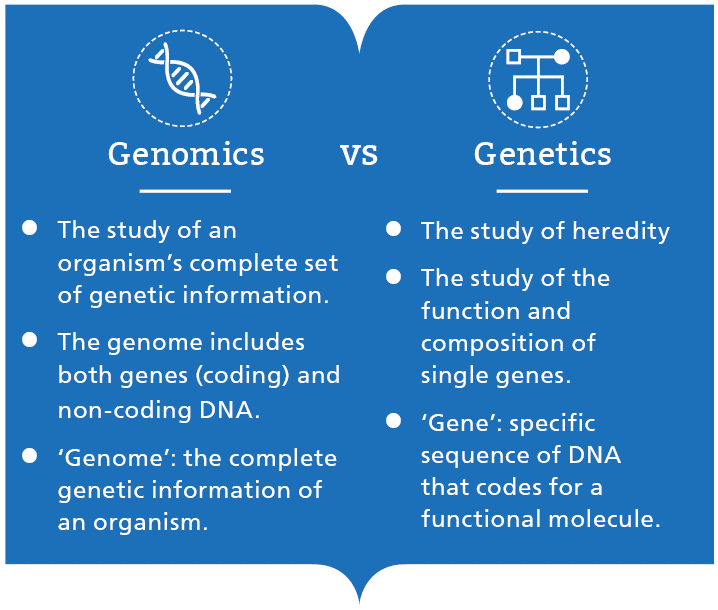
Although you may be familiar with ‘genetics’, especially in relation to certain tests, the concept of genomics is less well understood.
Some types of tests are indeed genetic, because they test for a condition by looking for a variation in a specific gene.
Genomics, however, describes how we sequence, analyse, interpret and act on information from the whole genome, or any part of it. The National Genomic Test Directory refers to all tests as ‘genomic’ and we will do the same throughout this resource.
Take a look at our handy infographic below to learn more about the differences between the two terms.
Why me?
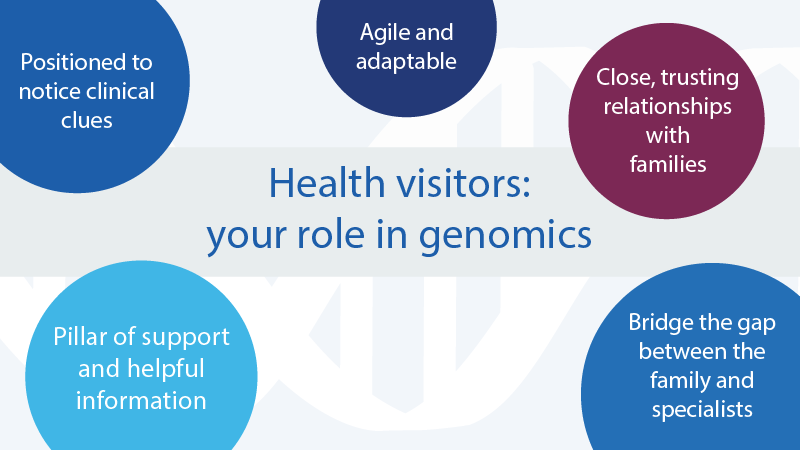
Health visitors are in a unique position to make a big impact on families’ lives because of the things they see and hear that other healthcare professionals might not.
By using your qualities and skills as a health visitor and learning about genomics, you can make all the difference: from being equipped to make a timely referral to genomic services, to being a beacon of support for families on their diagnostic odyssey.
Look at the diagram for some of the qualities that you embody to help families through a genomics journey.
Why now?
Planning for the future
With genomics formally supported by the NHS Long Term Plan, it is set to develop rapidly in the coming years – with more genomic tests becoming available to more people, and more public awareness around rare disease.
If you want somewhere to start, we recommend this introduction to genomics for health visitors, produced in collaboration with the iHV.
Newborn genome sequencing
Health visitors should be aware of the Newborn Genomes Programme’s Generation Study – a research study run by Genomics England in partnership with the NHS. This will explore the potential of whole genome sequencing of newborns to find and treat rare conditions early. This could have a huge impact on the number of children diagnosed with genetic conditions, which may affect their health while in your care.
The study has been running since mid-2023 and will sequence up to 100,000 babies’ genomes, so there’s no better time to learn more about how genomic testing can affect your practice.
You can learn more about the Newborn Genomes Programme on the Genomics England website.
How can I learn more?
Yes, there are many resources available to help you better understand and apply genomics in your practice, including this webpage: Here are some to get you started:
Last updated on 3rd September 2025